

close
Choose Your Site
Global
Social Media
Views: 0 Author: Site Editor Publish Time: 2026-08-21 Origin: Site


Choosing the wrong thread can compromise seam integrity, cause fabric puckering, or lead to premature garment failure. You might spend hours cutting and pinning a garment. However, if you load the wrong spool, you risk watching those seams pop during their very first wear.
Natural fiber purists often default to cotton, while commercial applications rely on the durability of synthetics. This core conflict leaves many makers and manufacturers guessing. Choosing incorrectly creates mismatched shrinkage rates, unresolved tension issues, and irreversible fabric damage over time.
We will provide a clear, evidence-based framework for evaluating when to use Polyester Sewing Thread versus cotton thread. You will learn to make decisions based on fabric type, machine tension, and end-use wash-and-wear conditions. Read on to master thread selection and secure your seams permanently.
Thread choice goes far beyond color matching. The molecular structure of the fiber directly dictates how it behaves inside your sewing machine. It also determines how it survives years of wearing and washing. We must examine the inherent properties of both synthetic and natural options.
Manufacturers engineer synthetic fibers to survive extreme conditions. A standard Polyester Sewing Thread provides unparalleled consistency. It resists snapping under high-speed machine tension. Industrial machines run at thousands of stitches per minute. This speed generates immense friction at the needle eye. Synthetics glide through this friction without degrading.
Elasticity forms another critical advantage. Synthetics contain inherent give. This allows seams to stretch alongside knit fabrics or activewear without popping. When you bend your elbow in a spandex jacket, the thread must stretch alongside the fabric. Furthermore, synthetic fibers resist UV degradation, mildew, and harsh chemical wash treatments. They do not fade easily in the sun. They survive commercial bleaching processes intact.
Natural fibers offer completely different advantages. Cotton withstands high-temperature ironing without melting. This proves crucial for pressing crisp seams on tailored garments. If you touch a hot iron to standard synthetics, they can melt or distort. Cotton remains stable.
Cotton also behaves predictably under stress. It has a lower breaking point than its synthetic counterparts. In high-stress situations, cotton snaps before the fabric tears. We often prefer this outcome. Repairing a broken seam is easy. Repairing a torn piece of fabric is nearly impossible. Finally, cotton absorbs dyes uniformly. Manufacturers rely on this for post-sew dyeing processes. The thread will perfectly match the garment color after a dye bath.
Table 1: Material Property Comparison
| Property | Polyester Thread | Cotton Thread |
|---|---|---|
| Tensile Strength | High (Resists high-speed snapping) | Moderate (Snaps before fabric tears) |
| Elasticity | High (Moves alongside knits) | Low (Rigid structure) |
| Heat Tolerance | Low/Moderate (Can melt under hot irons) | High (Withstands direct high heat) |
| Dye Absorption | Low (Must be dyed during manufacturing) | High (Excellent for garment dyeing) |
Understanding material properties helps us assign the right tool for specific jobs. Synthetics dominate modern apparel manufacturing for very good reasons. However, utilizing them incorrectly can ruin delicate projects.
You should specify synthetic thread whenever garments require movement. Knit and stretch fabrics demand elastic seams. Spandex, jersey, and athletic wear rely on these flexible stitches. If you use rigid thread here, the seam will pop the moment someone stretches the fabric.
Heavy-duty construction also demands synthetics. You cannot risk seam failure on outerwear, bags, and upholstery. A backpack holding heavy textbooks requires maximum tensile strength. Furthermore, machine embroidery relies heavily on synthetics. High-sheen Polyester Sewing Thread prevents breaks during rapid, multi-directional stitching. It slides effortlessly through dense fabric layers.
Despite their strength, synthetics carry distinct risks. The most famous is the "Cheese Wire" effect. Imagine slicing soft cheese using a tight metal wire. Using strong synthetic thread on delicate, lightweight natural wovens causes this same effect. Over years of wear, the unbreakable thread slices through the fragile vintage cotton. The fabric shreds along the seam line.
Heat damage presents another major risk. Synthetic fibers melt or weaken rapidly. If you press a seam using an iron set to cotton or linen temperatures, the thread degrades. This creates invisible weak points. The seam might hold initially, but it will fail after a few wash cycles.
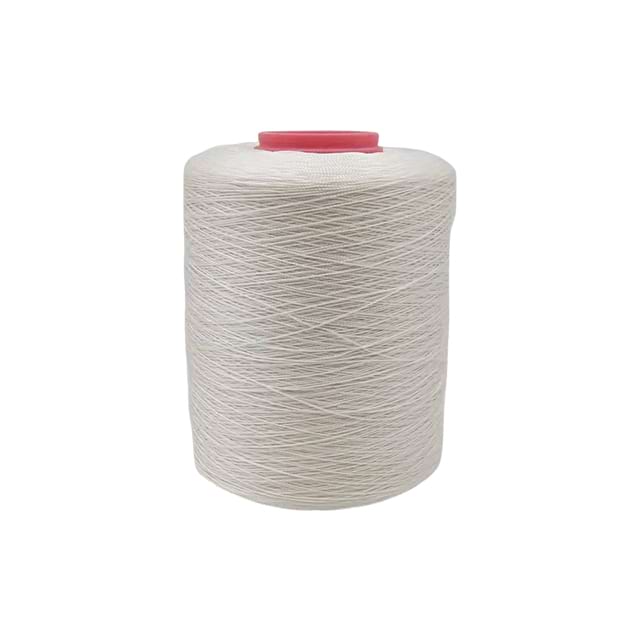
While synthetics rule activewear, natural threads remain irreplaceable in specific disciplines. Artisans, quilters, and historical preservationists rely on cotton to protect their meticulous work.
Quilting and piecing require absolute dimensional stability. Cotton blends beautifully into the quilt top. More importantly, it shrinks at the exact same rate as the cotton batting and fabric. When you wash a finished quilt, everything shrinks together uniformly. This prevents unsightly puckering along the seam lines.
Heirloom sewing demands this natural option. You want the thread to degrade or break before damaging irreplaceable vintage fabrics. The thread acts as a sacrificial element. Additionally, lightweight wovens pair perfectly with it. Standard cotton apparel, like button-down shirts and summer dresses, benefit from natural seams. They press crisply and hold their shape beautifully.
You must anticipate shrinkage. Untreated cotton shrinks up to 3% when washed. If you sew pre-shrunk or synthetic fabrics using untreated natural thread, the seams will warp. The fabric remains flat, but the thread contracts. This ruins the garment's drape.
Snapping poses another challenge. Natural fibers are highly susceptible to breaking on heavy-duty projects. Denim, canvas, and leather require immense tension to sew properly. Standard cotton will snap repeatedly under these conditions. You must use a specialized, thick gauge if you insist on natural fibers for heavy fabrics.
Decision fatigue often strikes when browsing thread displays. We can eliminate this confusion by applying a standardized evaluation framework. Follow these four categories to guarantee optimal seam performance.
Action: Always use polyester sewing thread.
Reasoning: Synthetics do not shrink. Natural threads do. Mixing them guarantees uneven seams post-wash. If the fabric contains polyester, nylon, or acrylic, strictly stick to synthetic thread. You ensure the materials age and react to laundering uniformly.
Action: Always use polyester or specialty stretch thread.
Reasoning: Cotton possesses zero stretch. A rigid seam on a knit fabric creates immediate structural failure. The fabric expands, the thread refuses to yield, and the stitches snap. Always match the stretch of the seam to the stretch of the garment.
Action: Evaluate based on project lifespan.
Reasoning: For structural longevity on workwear or bags, choose heavy-duty synthetics. If you want a traditional faded aesthetic, choose poly-core thread wrapped in cotton. The synthetic core provides modern strength. The outer wrapping fades beautifully over time, mimicking vintage denim construction.
Action: Use cotton for high-end/heirloom results; use all-purpose synthetics for budget/everyday wear.
Reasoning: Everyday play clothes or budget crafts survive just fine using synthetics. However, if you are piecing a luxury quilt or sewing a tailored linen suit, natural threads ensure proper pressing and authentic degradation.
Choosing the correct spool solves only half the puzzle. You must adapt your machine settings to accommodate the unique physical properties of your chosen fiber. Neglecting machine setup leads directly to skipped stitches and jammed bobbins.
Tension dictates the quality of your stitch. Synthetics stretch as they pass through the metal tension discs. If you over-tighten the tension, you stretch the thread too much before it enters the fabric. After you finish sewing, the thread relaxes. It shrinks back to its original length. This pulls the fabric together, leading to severely puckered seams. You must lower tension slightly for synthetics.
Conversely, natural fibers require lower tension generally, but for a different reason. They do not stretch. If the tension grabs too tightly, or if the thread catches on a burr, it snaps immediately. You must maintain smooth, balanced tension to prevent frustrating breakages.
Needles interact differently based on fiber type. Synthetic fibers generally perform best alongside Microtex or Ballpoint needles. The sharp, slim profile of a Microtex needle punches through dense synthetics cleanly. Ballpoint needles push knit fibers apart without slicing them.
Cotton pairs beautifully with standard Sharp or Quilting needles. The friction profile of a natural fiber requires a slightly different needle eye shape to prevent shredding the thread coat during rapid sewing.
Machine maintenance schedules depend heavily on your material choices. Natural fibers shed micro-fibers aggressively as they move. This lint packs into the bobbin case. Operators must factor in frequent machine cleaning. Excessive lint throws off machine timing and blocks feed dogs.
Synthetics run smooth and clean. They shed almost zero lint. This extends the time between maintenance cycles. Industrial facilities prefer this cleanliness because it reduces machine downtime and keeps production floors moving efficiently.
A: Yes, for everyday garments. However, for heirloom pieces, quilts, or items frequently ironed on high heat, cotton thread is safer to prevent fabric damage and melting.
A: No. This is a myth. Modern polyester thread is smooth and does not damage metal tension discs. In fact, it leaves behind less lint than cotton, reducing internal wear.
A: It is a hybrid thread featuring a strong polyester core wrapped in cotton fibers. It offers the high tensile strength of polyester with the heat resistance and matte finish of cotton.
A: Cotton has lower tensile strength than polyester. Breakage usually indicates tension set too high, a burr on the needle/throat plate, or using old, dry thread that has degraded.
