

close
Choose Your Site
Global
Social Media
Views: 0 Author: Site Editor Publish Time: 2026-05-12 Origin: Site


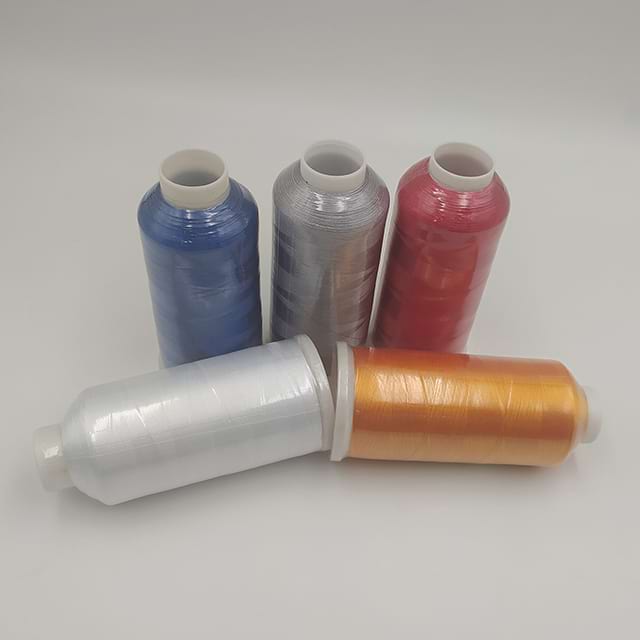
The world of textile manufacturing and commercial embroidery often faces the challenge of balancing material costs with high-quality output. While specialized embroidery threads are the industry standard, many B2B operators and industrial manufacturers explore the feasibility of using standard sewing thread for machine embroidery to streamline inventory or achieve specific textural effects. Navigating this crossover requires a deep understanding of thread tensile strength, friction resistance, and the mechanical limits of high-speed embroidery equipment to ensure that production efficiency is not compromised.
Using sewing thread for machine embroidery is technically possible but requires precise adjustments to machine tension, needle selection, and digitized density to prevent thread breakage and fabric puckering. While traditional embroidery thread is designed for sheen and high-speed movement, high-quality Embroidery Sewing Thread can be utilized in specific industrial applications where a matte finish or increased seam strength is required over aesthetic luster.
This comprehensive guide examines the technical nuances of substituting threads, comparing material compositions and performance metrics. We will provide actionable strategies for optimizing your machinery to handle varied thread weights, ensuring your B2B operations maintain a competitive edge through versatile production techniques.
Section | Summary |
1. Introduction: Navigating Sewing Thread | An overview of the role of thread selection in industrial embroidery and the shifting trends toward multi-purpose thread utilization. |
2. Can You Actually Use Sewing Thread? | A technical exploration of the feasibility of using sewing thread, focusing on the mechanical requirements of modern embroidery machines. |
3. Sewing Thread vs. Embroidery Thread | A detailed comparison of material properties, sheen, and durability between standard sewing and specialized embroidery filaments. |
4. Practical Techniques | Actionable steps for machine calibration, including tension settings and stabilizer choices for non-standard threads. |
5. Troubleshooting Common Issues | Solutions for technical hurdles like bird-nesting, frequent breaks, and puckering caused by thread diameter variations. |
6. Conclusion | Final summary of best practices for integrating versatile thread options into professional embroidery workflows. |

Choosing the right filament is the foundation of any successful textile project, and understanding how sewing thread interacts with high-speed machinery is crucial for industrial efficiency.
In the competitive landscape of B2B textile production, the search for versatile materials often leads professionals to question the rigid boundaries between sewing and embroidery supplies. Historically, these two categories were kept strictly separate due to the different mechanical stresses involved in their respective processes. However, as machine technology advances, the ability to utilize a wider range of filaments has become a significant advantage for workshops looking to diversify their product offerings.
Understanding the physics of a stitch is essential when considering non-standard materials. Standard sewing thread is designed for structural integrity, often featuring a functional matte finish and high twist per inch to hold seams together under pressure. In contrast, embroidery thread is engineered for speed and visual appeal. When a manufacturer decides to utilize an Embroidery Sewing Thread solution, they are bridging the gap between structural durability and decorative precision.
This introduction serves as a roadmap for professionals who need to maximize their equipment's potential. By mastering the techniques required to adapt sewing thread for decorative use, businesses can reduce downtime caused by specialized thread shortages and explore new aesthetic dimensions in their garment finishing processes.
Yes, you can use sewing thread for machine embroidery, provided that you compensate for its increased thickness and lower lubricity through specialized machine settings and proper needle sizing.
The primary concern when using sewing thread in an embroidery context is the "friction coefficient." Embroidery machines operate at significantly higher speeds—often exceeding 800 to 1,000 stitches per minute—compared to standard sewing machines. Standard sewing thread is generally thicker (40wt or 50wt) than standard embroidery thread (mostly 40wt but with a different construction), which means it can create more heat as it passes through the needle eye and the fabric.
The construction of sewing thread usually involves a two-ply or three-ply twist designed for "locked" seams. This differs from the trilobal polyester or rayon constructions typically found in embroidery filaments.
Thread Diameter: Sewing thread is often thicker, which requires larger needle eyes to prevent shredding.
Tensile Strength: While stronger for seams, sewing thread may not have the "give" required for the rapid multi-directional movement of an embroidery hoop.
Surface Smoothness: Sewing threads often have more "fuzz" or lint, which can accumulate in the bobbin case during high-speed embroidery.
There are specific scenarios where using a high-quality Industrial Sewing Thread for Embroidery is actually preferred over standard glossy threads.
Matte Aesthetics: For vintage looks or tactical gear where high-gloss sheen is undesirable.
Heavy-Duty Applications: On thick canvases or denims where the embroidery needs to withstand significant abrasive wear.
Small Batch Sampling: When a specific color match is only available in sewing thread and the design density is low.
The fundamental difference lies in the balance between aesthetic luster and structural integrity, with embroidery thread prioritizing shine and sewing thread prioritizing seam strength.
Comparing these two materials requires looking at the technical specifications that govern how they behave under the needle. Most embroidery threads are 40-weight trilobal polyester, a shape designed specifically to reflect light. Sewing threads, particularly those made from spun polyester, have a rounder profile and a matte finish. This difference affects not only how the light hits the finished design but also how much space each stitch occupies on the fabric surface.
Feature | Standard Embroidery Thread | Standard Sewing Thread |
Common Materials | Rayon, Trilobal Polyester | Spun Polyester, Cotton, Nylon |
Finish | High Gloss / Sheen | Matte to Semi-Matte |
Elongation | Higher (to absorb high-speed shock) | Lower (to maintain seam stability) |
Chemical Resistance | High (Bleach resistant if polyester) | Variable |
The visual outcome is the most immediate difference noticed by B2B clients. Embroidery thread provides a "liquid" look where colors blend smoothly due to the reflective nature of the fibers. Using sewing thread results in a flatter, more "textile-like" appearance. This can be a benefit for brands looking for an "organic" or "hand-crafted" feel. However, because sewing thread is often thicker, it creates a bulkier stitch. If the digitizing software isn't adjusted to reduce stitch density, the final design may feel stiff or "bulletproof," which can negatively impact the drape of the garment.
Successful implementation requires a "systems" approach, adjusting the needle, the tension, and the digitized design to accommodate the unique properties of the sewing filament.
When transitioning to a more robust Embroidery Sewing Thread, the first step is needle selection. A standard 75/11 embroidery needle may be too small for a 50wt sewing thread, leading to friction-induced breaks. Moving to a 80/12 or even a 90/14 Topstitch needle can provide the extra clearance needed in the needle eye.
Adjusting Tension: Sewing thread is generally under more internal tension due to its twist. You must often loosen the top tension on your embroidery machine to prevent the fabric from drawing in or the thread from snapping.
Slowing Down the Machine: Speed is the enemy of heat. Reducing your machine's SPM (stitches per minute) by 20-30% can drastically reduce thread breakage and improve stitch definition when using non-specialized filaments.
Stabilizer Selection: Since sewing thread is heavier, use a slightly firmer stabilizer (cut-away is preferred over tear-away) to support the added weight of the stitches and prevent the design from sinking into the fabric.
The most common issues—thread breakage and fabric puckering—are usually symptoms of incorrect tension or excessive stitch density for the thread's diameter.
In a professional B2B setting, downtime is costly. When using sewing thread, you may encounter "looping" or "bird-nesting." This often occurs because the sewing thread does not flow as smoothly through the thread path as a lubricated embroidery thread would. Using a specialized thread lubricant or ensuring the thread path is completely free of lint can mitigate these issues.
Thread breakage usually stems from heat buildup at the needle.
Check the Needle Eye: Ensure there are no burrs; sewing thread is more abrasive and can wear down needles faster than rayon.
Lubrication: Some industrial operators use a silicone thread lubricant to help the sewing thread glide through the tension discs.
Spool Orientation: Use a vertical thread stand for larger cones of high-quality thread to ensure an even pull without snagging on the spool's edge.
Puckering happens when the thread tension is higher than the fabric's ability to remain flat.
Lighten the Density: In your digitizing software, increase the spacing between stitches (density) by 10-15% to account for the thicker sewing thread.
Hooping Technique: Ensure the fabric is "drum tight" but not stretched. Stretching the fabric during hooping, combined with tight sewing thread, will lead to significant puckering once the hoop is removed.
Underlay Adjustment: Use lighter underlay stitches to avoid building up too much bulk beneath the top decorative layer.
Mastering the use of sewing thread in machine embroidery opens up a world of possibilities for the textile professional. While specialized embroidery threads will always remain the standard for high-gloss, intricate designs, the practical application of sewing thread offers a durable, matte alternative that is perfect for specific industrial and aesthetic needs.
By focusing on the technical adjustments mentioned—specifically needle sizing, tension calibration, and density management—B2B operators can successfully integrate varied thread types into their production line. This flexibility not only allows for greater creative expression but also provides a safety net for supply chain fluctuations. Remember that the key to success lies in testing; always run a sample on scrap fabric of the same type to ensure your settings are dialed in for the specific thread and fabric combination. With these techniques, your machine embroidery projects will achieve professional results, regardless of the filament chosen.
